English| EUR
Suggested for you
More currencies
Choose a language
Parasailing looks alarming from the beach at Vilamoura and feels oddly quiet once the harness takes the load. This is parasailing dangerous guide separates the real risk factors — tow rope condition, wind, crew discipline — from the ones that only look frightening from sea level. It also sets out what a licensed Algarve Coast operation does differently.
Quick answer
No — parasailing off the Algarve Coast is a low-risk activity when flown from a licensed winch boat, and flyers stay harnessed to the vessel from launch to landing. Operators in Vilamoura fly daily from 09:00–21:00, though the sea is calmest between 09:30 and 14:00. Safety equipment is included with the flight. The one real caveat is wind: a responsible skipper cancels rather than compromises.
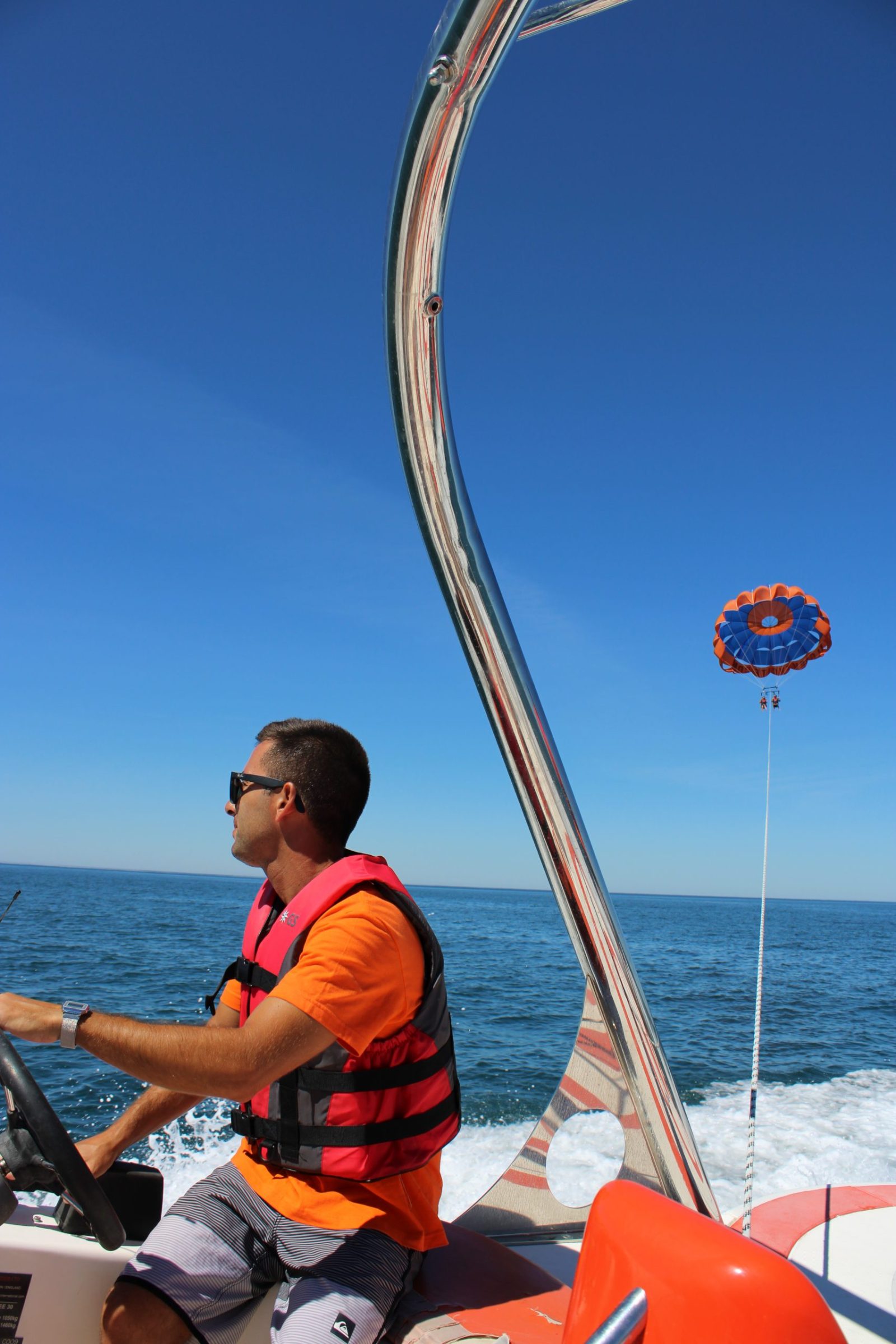
Most first-timers picture a running beach launch. Off the Algarve Coast, that image is obsolete. Flights here work from a winch boat: the canopy inflates behind the stern, the flyer is clipped into a harness on a padded platform, and a hydraulic winch pays out the tow rope until the parachute settles a few hundred feet above the water. The same winch brings it back down, dry. Asking is parasailing dangerous in this setting means examining one closed system rather than an open stretch of sand. The regulatory frame matters as much as the hardware. Commercial water sports in Portugal operate under the Autoridade Marítima Nacional, which licenses the vessel, the skipper and the activity itself; the local captaincy can suspend operations when sea state demands it. Crews working out of Marina de Vilamoura run to that standard. Life jackets and harnesses are issued before boarding and are included with the flight rather than sold separately, which removes any temptation to fly without them. Where risk does concentrate is narrow and well documented: equipment fatigue, overloaded tow lines, and wind that shifts faster than a crew reacts. Line failure is the scenario the industry takes seriously, which is why careful operators retire rope on a schedule and log every flight hour. Height is not the variable travellers should worry about. Weather is, and the Atlantic breeze over Praia da Falésia and the Vilamoura shoreline tends to build through the afternoon, this autumn included. That leaves a practical test for anyone weighing Algarve parasailing safety before booking. Watch how the crew behaves rather than what the brochure claims: a proper briefing on the platform, visible inspection of the harness clips, a skipper who counts passengers against the rated load, and a willingness to postpone a flight instead of running it. Flyers who want confirmation before committing can call the operations office at +351937777913 or ask at the desk on Cais Q. Visitors researching parasailing em Vilamoura will find the remaining logistics — the weekly schedule, the fee, the calmest arrival window and the walk from the marina car parks — set out in the dedicated sections of this site, with live availability on the booking pages. For most travellers, the question is parasailing dangerous resolves less into a verdict on the sport than into a judgment about the crew flying it.
“Height is not the variable travellers should worry about; wind is.”
Public concern regarding parasailing often stems from a lack of familiarity with modern aviation-grade equipment and standardized maritime safety protocols. Professional operators in the Algarve utilize rigorous maintenance schedules and real-time weather monitoring to ensure passenger security.
MythParasailing is a high-risk extreme sport
FactParasailing is classified as a low-impact recreational activity when conducted by certified operators using modern, maintained winch-boat systems.
MythEquipment failure is common
FactModern parasailing rigs undergo routine safety inspections and utilize high-strength, certified materials designed to exceed standard load requirements.
MythOperators ignore dangerous wind conditions
FactStrict regulatory standards require operators to monitor wind speeds and sea states continuously, leading to immediate cancellation of flights if conditions fall outside safe operational parameters.
MythThe harness can easily detach
FactStandardized safety harnesses feature redundant locking mechanisms and are secured by certified personnel to ensure the passenger remains firmly attached throughout the flight.
The best arrival window is 09:30–14:00, as morning and early afternoon offer the calmest sea conditions and clearest visibility for a stable experience. Selecting these hours minimizes exposure to higher afternoon winds which can complicate takeoff and landing maneuvers.
Mild 18°C–22°C; stable breezes
Cooler temperatures and calm seas provide consistent conditions.
Warm 25°C–30°C; light morning winds
Early sessions are preferred to avoid peak afternoon thermal winds.
Warm 22°C–26°C; consistent sea states
Stable weather continues with reduced passenger volume after summer.
—
Calm water conditions are most frequent during these early time slots.
Verdict: The best slot is between 09:30 and 14:00 during the months of May, June, or September for optimal sea and wind stability.
The parasailing operator at Marina de Vilamoura maintains a consistent weekly schedule to accommodate visitors. Operations run daily throughout the week.
The parasailing launch point is located at the Marina de Vilamoura in the Algarve. Visitors should head to Office 4 at Cais Q to check in for their scheduled activity.
N125 or A22 (Via do Infante) to Vilamoura exit
EVA Transportes bus service to Vilamoura terminal
Walk via the main marina promenade towards Cais Q
Direct drop-off at Marina de Vilamoura
Parking is available in the public lots surrounding the marina; allow extra time to walk from the parking areas to Cais Q before your scheduled departure.
Focus on preparation and clear communication to increase your comfort and control during the flight.
Avoid loose sandals that can fall off during takeoff or landing, choosing instead footwear that straps firmly to your feet.
Opt for tight-fitting sportswear to minimize drag and prevent fabric from flapping in the high-altitude wind.
Establish basic hand signals with the crew before takeoff to indicate if you want to be lowered or if you are uncomfortable during the flight.
Ensure the leg straps are adjusted snugly before leaving the boat deck to prevent sliding and maintain a comfortable seated position.
If flying in tandem, coordinate your movements and weight distribution with your partner before the captain initiates the winch ascent.
Store loose items like hats, sunglasses, or phones in the lockers at the Marina de Vilamoura office rather than taking them on the flight.
Everything you need to know about is parasailing dangerous
Parasailing is generally considered a safe recreational activity when conducted by certified operators using well-maintained equipment. While many wonder if parasailing dangerous conditions exist, professional crews continuously monitor sea states to ensure passenger security. Instructors provide thorough briefings before every flight to ensure participants feel comfortable and informed. Safety is prioritized through the use of high-quality life jackets and harnesses that meet rigorous marine standards. Many visitors ask is parasailing dangerous when breezes pick up, but operators will suspend flights if wind speeds exceed safe operational limits. Always follow the captain's instructions to maintain a controlled ascent and descent. Children may participate depending on their age, weight, and maturity level as determined by the crew on-site. The price for this parasailing experience is 45 EUR per flyer, which includes all necessary safety equipment. For the calmest conditions, the best arrival window is between 09:30 and 14:00. While some travelers ask is parasailing dangerous, it remains a popular and controlled way to enjoy aerial views of the coastline compared to more physically demanding water sports.